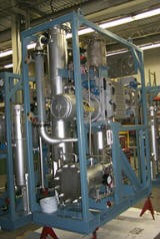
Vacuum Pump Systems for Ethylene Oxide (EtO) and Steam Sterilization
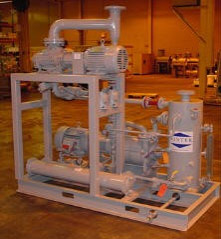
Vacuum Pump Systems for Ethylene Oxide (EtO) and Steam SterilizersWintek supplies custom-engineered state-of-the-art vacuum systems for a wide range of sterilizer applications.

Steam Sterilizers

These are the most basic requirements utilizing either once-thru or full recovery water sealed liquid ring vacuum systems. Larger systems also include pre-condensers.

100% EtO Sterilizers: Water-Sealed Vacuum Systems for Sterilization

In addition, Wintek engineers many Water-Sealed vacuum systems in use with 100% Ethylene Oxide (EtO) sterilizers with the previously described water limitations in mind. Proper operating procedures and design parameters assure reliable performance. However, the capacity decreases as EtO dissolves into the water sealant. Wintek has even provided boosted liquid ring vacuum systems on EtO sterilization service for one client with a vacuum requirement of 0.03 mmHgA.

Synthetic Oil Sealed Vacuum Systems for 100% EtO Sterilization

Wintek’s synthetic oil sealed vacuum systems developed for 100% EtO gas sterilizers, eliminate the capacity and end vacuum losses inherent with gas contamination in water-sealed systems. Wintek has mastered the concept of using synthetic seal fluids with rugged liquid ring pumps and has adapted this technology for 100% EtO. Since our synthetic sealant does not react with EtO, it is essentially insoluble.

Consistent Capacity

Our experience with 100% EtO sterilization systems has proved that the water sealed designs, such as those that our competitors use, experience capacity problems because of EtO solubility in water. Our Synthetic sealed vacuum system provides consistent repeatable performance since the EtO is not soluble in the sealant. Moreover, the cooling water temperatures do not affect the vacuum pump system (although the condenser efficiency will be affected).

Higher End Vacuum

Wintek’s WO2 sealant is a low vapor pressure fluid which allows operation near 15 Torr (29.5″HgV) with a liquid ring vacuum pump, regardless of operating temperature, and without concern for EtO contamination. Water sealed units also have an end vacuum of 26 Torr (29″HgV) only with uncontaminated, 60oF seal water. However, higher seal water temperatures and any EtO contamination results in loss of capacity and end vacuum.

Boosted Systems (<0.1 Torr End Vacuum)

Wintek can add air jets and/or rotary lobe boosters to increase pumping speed or approach final vacuum levels down to 0.03 Torr. Proper booster engineering involves many interconnected parameters and cannot be done by simply looking at a chart in product literature. Wintek’s experiences and references of boosted liquid ring systems are unmatched by even our better-known competition.

Vacuum Systems for Pilot Plants

Wintek has designed numerous EtO sterilization pilot plant vacuum skids, many include knock-out pots, condensers, pressure control, transmitters, etc. Each pilot plant skid is designed after in-depth discussions with the customer to specify vacuum level, capacity, range of vapors handled, expected operator interface, level of instrumentation, etc. A complete review of advantages and disadvantages of each type of vacuum pump gives the customer a full understanding of the system capabilities. Contact Wintek with your requirements.
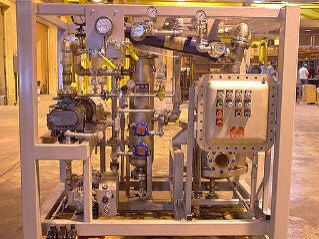
Vacuum System for major Pharmaceutical Company Boosted Rotary Vane vacuum system with SS Knock-out Pot, condenser, receiver.
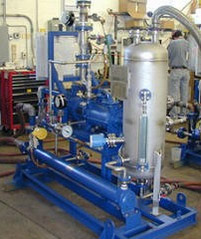
Pilot Plant Vacuum System for major Pharmaceutical Company 10 HP 2-stage Liquid Ring Vacuum Pump, all 316ss, ASME
Pilot Plant Vacuum System for Small Scale Organics of major Pharmaceutical Company. 15 HP once-thru-oil vane pump Hastelloy KOPot, condenser, receivers.

FAQs about Vacuum Sterilization

Vacuum sterilization, often called pre-vacuum or dynamic air removal sterilization, uses a vacuum pump to actively remove air from the sterilization chamber before introducing steam, as opposed to gravity displacement sterilization, which relies on steam entering the chamber to passively push air out through a drain. Actively removing air first allows steam to penetrate more thoroughly and quickly throughout the load.

Trapped air pockets act as insulating barriers that prevent steam from directly contacting all surfaces of the load, and since air-steam mixtures have a lower effective temperature than pure steam at a given pressure, any residual air can result in cooler spots within the load that fail to reach the temperature needed for effective sterilization.

A pre-vacuum autoclave pulls one or more vacuum pulses on the chamber before the sterilization phase begins, actively drawing air out of the load and chamber, then introduces steam which more thoroughly penetrates the evacuated space, followed by the sterilization hold at the target temperature and pressure, and finally a drying phase that often also uses vacuum to help evaporate residual moisture from the load.

Some sterilizers use just one vacuum pulse before steam introduction, while others use multiple alternating vacuum and steam pulses, sometimes called pulsing or fractionated vacuum cycles, which can more thoroughly remove air from complex loads like porous materials, wrapped instruments, or items with long narrow lumens that are more difficult to fully penetrate with steam.

Loads with lumens, porous materials, or densely packed items can trap air in ways that a single vacuum pulse may not fully overcome, so repeated evacuation and steam introduction cycles help ensure air is progressively removed and replaced with steam throughout even the most challenging load configurations.

Liquid ring vacuum pumps and rotary vane pumps are both used in sterilization applications, with liquid ring pumps often preferred in larger industrial or hospital central sterile processing systems due to their reliability, tolerance for moisture and steam condensate, and suitability for continuous duty operation.

After the sterilization hold phase, applying vacuum helps residual moisture evaporate more readily from the load at lower temperature, since reduced pressure lowers water’s boiling point, allowing items to come out of the cycle drier than they would with steam and heat alone, which is particularly important for wrapped instruments that need to remain dry for storage.

A vacuum leak test checks whether the sterilizer chamber can hold a vacuum without significant air in-leakage over a specified time period, since even small leaks can compromise air removal effectiveness and steam penetration, making this test a standard part of routine sterilizer qualification and preventive maintenance programs.

Instruments with long, narrow channels are especially prone to trapping air pockets that steam struggles to displace through gravity displacement alone, so the active air removal provided by vacuum cycles is often essential to ensure steam actually reaches all internal surfaces of these more challenging instrument geometries.

Effectiveness is typically verified through a combination of physical monitoring, such as chamber temperature, pressure, and time tracking, along with chemical indicators that change color when exposed to appropriate sterilization conditions, and biological indicators containing resistant spore populations that confirm actual microbial kill under real cycle conditions.

Hospitals and healthcare facilities for surgical instrument reprocessing, pharmaceutical manufacturing for sterilizing equipment and certain products, laboratory and research settings for sterilizing media and equipment, and medical device manufacturing all commonly rely on vacuum sterilization technology.

Common causes include chamber air leaks that compromise vacuum effectiveness, improperly loaded chambers that block steam penetration, inadequate vacuum pump performance due to wear or maintenance issues, insufficient number of vacuum pulses for challenging loads, and equipment malfunctions affecting temperature, pressure, or timing control during the cycle.

Overpacked chambers, improperly wrapped items, or loads arranged in ways that block steam and air pathways can prevent effective air removal and steam penetration even in a properly functioning vacuum sterilizer, making correct loading technique an important factor alongside the equipment itself.

Regular attention to vacuum pump performance and seal condition, routine vacuum leak testing, chamber door gasket inspection and replacement as needed, and periodic calibration of temperature, pressure, and vacuum sensors are all important for maintaining reliable and validated sterilization performance over time.