
An alternative to solvent replacement, as a mechanism to reduce cost and waste, is in–process solvent recovery utilizing vacuum technology. The usage of solvent vapor recovery equipment incorporating vacuum pumps and condensate receivers is economically preferable to raw materials substitution.

Industries such as chemical, pharmaceutical, metal powders, flavor and fragrance, and PET solid-state manufacturing use solvent recovery vacuum systems. For example, the solvent recovery process is typically as follows:
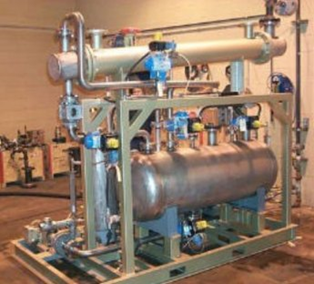
  1. solvent recovery condenser/receiver tank, liquid ring vacuum systemA solvent is oftentimes present in a liquid mixture with the desired product.
  2. Applied heat and/or vacuum vaporizes the solvent.
  3. Our systems condense and store the solvent in a vacuum receiver or drain directly into a liquid ring vacuum pump.
  4. Accumulated solvent is pumped or drained to a solvent storage tank.

Solvent recycling vacuum systems are regularly used in conjunction with the following types of process equipment:

  • Vacuum Dryers
  • Batch Reactors
  • Granulators

Wintek generally utilizes liquid ring vacuum pumps sealed with one of the solvents in the incoming process stream to maximize recovery and reduce potential contamination/environmental concerns.

The complexity associated with utilizing a solvent-sealed vacuum system is the calculation of the size of the liquid ring vacuum pump, as well as understanding how different solvent properties affect a pump’s performance. Liquid ring vacuum pumps sealed with a solvent other than water require advanced sizing calculations that most organizations are unable to perform. Wintek utilizes proprietary internally-developed liquid ring vacuum pump sizing software to size and design solvent-sealed process vacuum systems.

Wintek has experience designing for and helping customers recover the following solvents:

AnilineDiMethyl-CarbonateMethyl Ester-Soy
BenzeneD-LimoneneMethyl Methacrylate
ButaneDMS LHC FTMethylene Chloride
ButanolFurfuralMethyl Isobutyl Ketone (MIBK)
Butyl AcetateGlycerolMineral Spirits
Carbon TetrachlorideHeptanePropanol
ChlorobenzeneHexanePropylene Oxide
Dethylamine (DEA)HexeneStyrene
Dibutylamine (DBA)IsoPar CTetrahydrofuran
DiChloroMethane (DCM)Isopropyl Alcohol (IPA)Therminol
Dimethyl AcetamideMethyl Ethyl Ketone (MEK)Toluene
Dimethyl Formamide (DMF)MethanolVinyl Acetate
Dimethyl Sulfoxide (DMSO)Methyl AcrylateWater
Dimethylamine (DMA)Methyl ChlorideXylene

FAQs about Solvent Recovery Systems

Operating under vacuum lowers the boiling point of the solvent being recovered, allowing distillation or evaporation to occur at reduced temperatures. This saves energy and protects heat sensitive materials from thermal degradation. Wintek’s solvent recovery systems are engineered around this principle, using optimized combinations of condensers, receivers, and liquid ring vacuum pumps, often sealed with the recovered solvent itself, to maximize recovery efficiency while delivering reliable, fully pre-piped and factory-tested performance.

Liquid ring vacuum pumps are the most widely used technology, since they handle condensable solvent vapors well, tolerate liquid carryover without damage, and can be configured with a compatible seal liquid to avoid contaminating the recovered solvent.

While water can be used, Wintek generally designs solvent recovery systems using the solvent itself as the vacuum pump sealant. This reduces complexity and allows for the solvent itself to be condensed into the vacuum pump and collected without contaminating it.

This is a liquid ring pump configured to run in a closed loop using the recovered solvent or a compatible liquid as the seal fluid instead of water, keeping the seal fluid chemically consistent with the process and preventing water contamination of the final product. Wintek designs these systems with over 40 years of vacuum solvent recovery experience, optimizing performance and reliability while maximizing solvent recovery in demanding applications.

A condenser is typically installed between the process and the vacuum pump to knock out the bulk of the solvent vapor as liquid before it ever reaches the pump. This reduces the vapor load the pump has to handle, improves overall recovery efficiency, and protects the pump from excessive liquid loading. Wintek integrates these components into fully engineered, skid-mounted systems that are pre-piped and factory tested, ensuring efficient operation and reliable performance from startup.

Non condensable gases, such as air leakage into the system or inert gas used for blanketing, pass through the condenser and must be handled by the vacuum pump itself, which is why the pump has to be accurately sized for both vapor load and this non-condesnable gas flow. Wintek applies over 40 years of vacuum system experience to properly size and integrate pumps for these combined loads, helping ensure stable operation and consistent recovery performance.

Cooler seal liquid has lower vapor pressure, which allows the pump to achieve a deeper vacuum and reduces solvent loss through vaporization into the pump exhaust. Wintek’s systems include a heat exchanger to actively cool the recirculating seal liquid, and the colder the cooling or chilled water available, the better the liquid ring vacuum pump will perform.

Common causes include seal liquid running too warm, which increases solvent in the pump exhaust, an undersized condenser that lets too much vapor reach the pump, air in leakage that dilutes the vapor stream, or an undersized separator that allows liquid to escape with the discharged gas. Wintek’s proprietary design principles address these commonly found issues to ensure maximum solvent recovery.

This depends on the solvent’s material compatibility, but cast iron, carbon steel, and stainless steel are most common. Where particularly aggressive solvents are present, specialty materials such as hastelloy can be used.

A gas liquid separator downstream of the pump discharge separates the exhaust gas from the liquid phase. In solvent sealed systems, Wintek can add an after-condenser as needed to maximize solvent recovery.

Yes, particularly when deeper vacuum levels are needed than a standalone liquid ring pump can efficiently provide. Pairing a mechanical booster or jet ejector with a liquid ring backing pump allows the system to reach lower pressures while still retaining the liquid ring pump’s tolerance for condensable vapors. Wintek designs these multi-stage systems with liquid ring pumps sealed using the recovered solvent and fully integrated, pre-piped packages, ensuring efficient operation, improved recovery, and reliable performance in demanding applications.