
Methanol Recovery

Methanol recovery from biodiesel and glycerol products is imperative to the economics of any biodiesel production facility. Some facilities dispose of the used methanol; however, the recovery and reuse of methanol is possible. The cost of methanol can become quite high, so it is necessary to recover as much as possible.

Methanol in the Biodiesel Industry

Reacting vegetable (soy) oils with methanol in the presence of a catalyst results in the production of biodiesel. Most biodiesel made in the USA utilizes this process. For instance, this chemical process is known as transesterification. The reaction process forms two products: methyl ester (which is the bio-diesel) and glycerol. An excess amount of methanol forces the reaction to completion. For example, this amount usually ranges from 20-100% more methanol than required for reaction. Decanting or centrifuging separates the two products. The excess (unreacted) methanol is divided between the two products: approximately 40% biodiesel, and 60% glycerol.

For instance, flash towers supported by a biodiesel-sealed liquid ring vacuum system separate methanol from bio-diesel and glycerol. Firstly, the flash tower maintains a set temperature and pressure around the vapor pressure of methanol. This allows the vaporization of methanol while the biodiesel and glycerol remains a liquid. As a vapor, the methanol travels to the top of the tower and discharges to the solvent recovery condenser and receiver. Next, the receiver tank collects the condensed methanol. The biodiesel/glycerol falls to the bottom of the tower. Finally, a transfer pump moves the liquid to a desired location.

Wintek’s Methanol Recovery Units

Wintek-designed methanol recovery systems are an energy-efficient and cost-effective way to minimize operating cost. Wintek utilizes the customer’s clean biodiesel as the sealant in the liquid ring pump in an air-cooled sealant recirculation system. This design eliminates the utility cost of providing the vacuum pump with cooling water, as well as fresh sealant oil. Wintek’s expertise in this field has provided numerous customers with methanol recovery systems that have helped reduce operating costs.
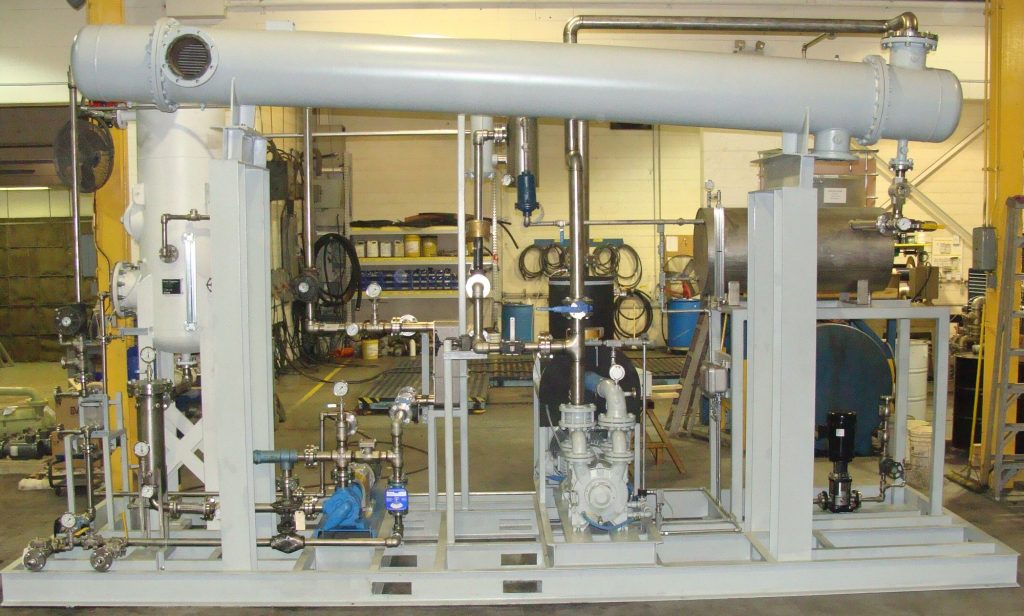
wintek MSDU flash evaporation system, methanol recovery
Wintek SN 101008: Removes MeOH from Gly to less than 5wt% (< 261#/hr MeOH )

FAQs about Methanol Recovery using Flash Evaporation Systems

Flash evaporation works by taking a liquid stream containing methanol and rapidly reducing its pressure, often across a valve or nozzle into a lower pressure vessel. This sudden pressure drop causes a portion of the liquid to instantly vaporize, or “flash,” since methanol has a much lower boiling point than the other components in the stream. The resulting methanol vapor is separated off and condensed for reuse, while the remaining liquid continues on for further processing.

Biodiesel is produced through a transesterification reaction that uses excess methanol to drive the reaction to completion, so unreacted methanol remains in both the biodiesel and glycerin product streams afterward. Recovering that methanol reduces raw material costs since it can be reused in the reaction, and it’s also necessary to meet product purity and safety specifications, since residual methanol is flammable and regulated in finished biodiesel and glycerin products.

Methanol recovery usually happens after the transesterification and separation steps, treating both the crude biodiesel stream and the glycerin byproduct stream, since both retain dissolved excess methanol that needs to be stripped out before further refining or sale.

Flash evaporation is attractive because it’s relatively simple, has low capital cost compared to distillation columns, and takes advantage of methanol’s significant boiling point difference from biodiesel and glycerin, allowing effective separation without extensive equipment. It’s a common first step or standalone method for facilities looking for a straightforward, lower cost recovery approach.

Operating the flash vessel under vacuum lowers the pressure and therefore the boiling point of methanol, allowing recovery to occur at lower temperatures than would be needed at atmospheric pressure. This reduces energy consumption and helps avoid thermal degradation of the biodiesel or glycerin product, which is especially important since these products can be heat sensitive.

Liquid ring vacuum pumps are a common choice, since they tolerate the condensable methanol vapor and any liquid carryover well, and they can be configured with a compatible seal liquid such as methanol itself or biodiesel in a closed loop to reduce operational compexity.

The vapor is routed to a condenser where it’s cooled back into liquid form, then typically collected in a recovery tank for reuse in the transesterification reaction, reducing the amount of fresh methanol the plant needs to purchase.

Wintek’s systems are custom designed to each customer’s process specifications while recovering more than 90% of the methanol for reuse. Wintek’s systems include multiple unit operations and can include multiple flash towers if needed to meet final product specifications.

Yes, methanol is flammable and toxic, so recovery systems need appropriate hazardous area classification, proper ventilation, leak detection, and careful management of vapor handling equipment to minimize the risk of vapor release or ignition sources near recovered methanol streams. Wintek’s systems are designed with appropriate safety controls in place to mitigate risk.

Some Wintek systems use multiple flash stages at progressively lower pressures to recover methanol more completely and efficiently, since each subsequent stage can capture additional methanol that wasn’t vaporized in the prior stage, improving overall recovery yield compared to a single flash step. This is dependent upon each customer’s process specifications.

Since methanol is a significant raw material cost in biodiesel production, effective recovery and reuse can meaningfully reduce operating costs, making flash evaporation based recovery systems an important part of overall plant profitability, particularly at larger production scales.