
Vacuum drying is the process of removing bulk moisture from a wet solid by exposing the mixture to vacuum. Drying is an essential operation in many different processes and is found in the food processing, pharmaceuticals, agriculture, powders and textiles industries. Vacuum blending and mixing use similar principles as in vacuum drying, so Wintek often sells process vacuum systems in these markets as well.

How Vacuum Dryers Work

Traditional dryers use two main driving forces to remove moisture: elevated temperatures and stripping gasses to saturate and remove vapors. Adding vacuum as a third force to the process greatly increases the overall efficiency of a dryer. A vacuum system lowers the pressure inside a large drying vessel. As the pressure within the vessel lowers to the vapor pressure of the liquid, the moisture will vaporize, leaving a dry product. Heaters installed on the vacuum dryer increase the temperature of the vessel. This increase in temperature coupled with the decrease in pressure allows for very high evaporation rates to occur. Once in vapor form, the vacuum system removes the moisture from the dryer. Depending on the customer’s desires, a heat exchanger condenses and a receiver tank collects the solvent.
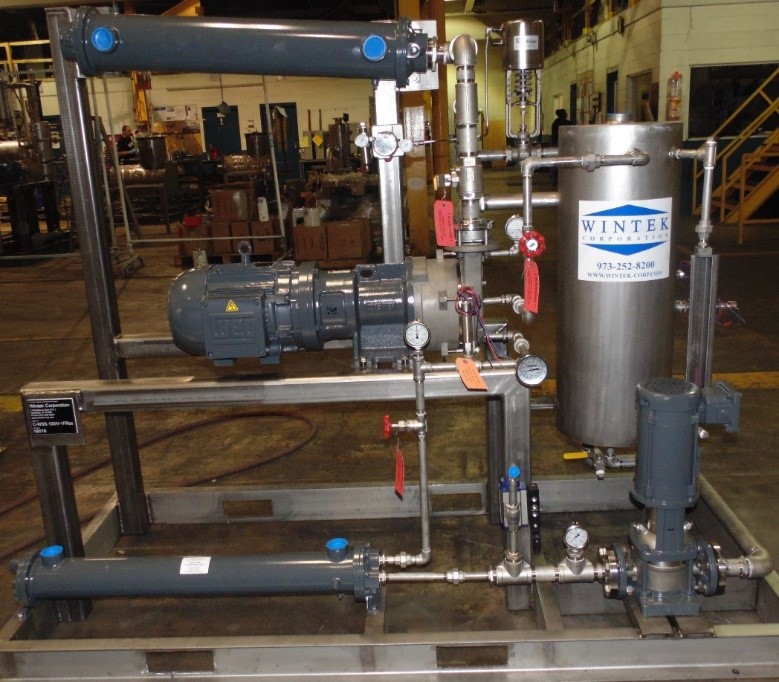
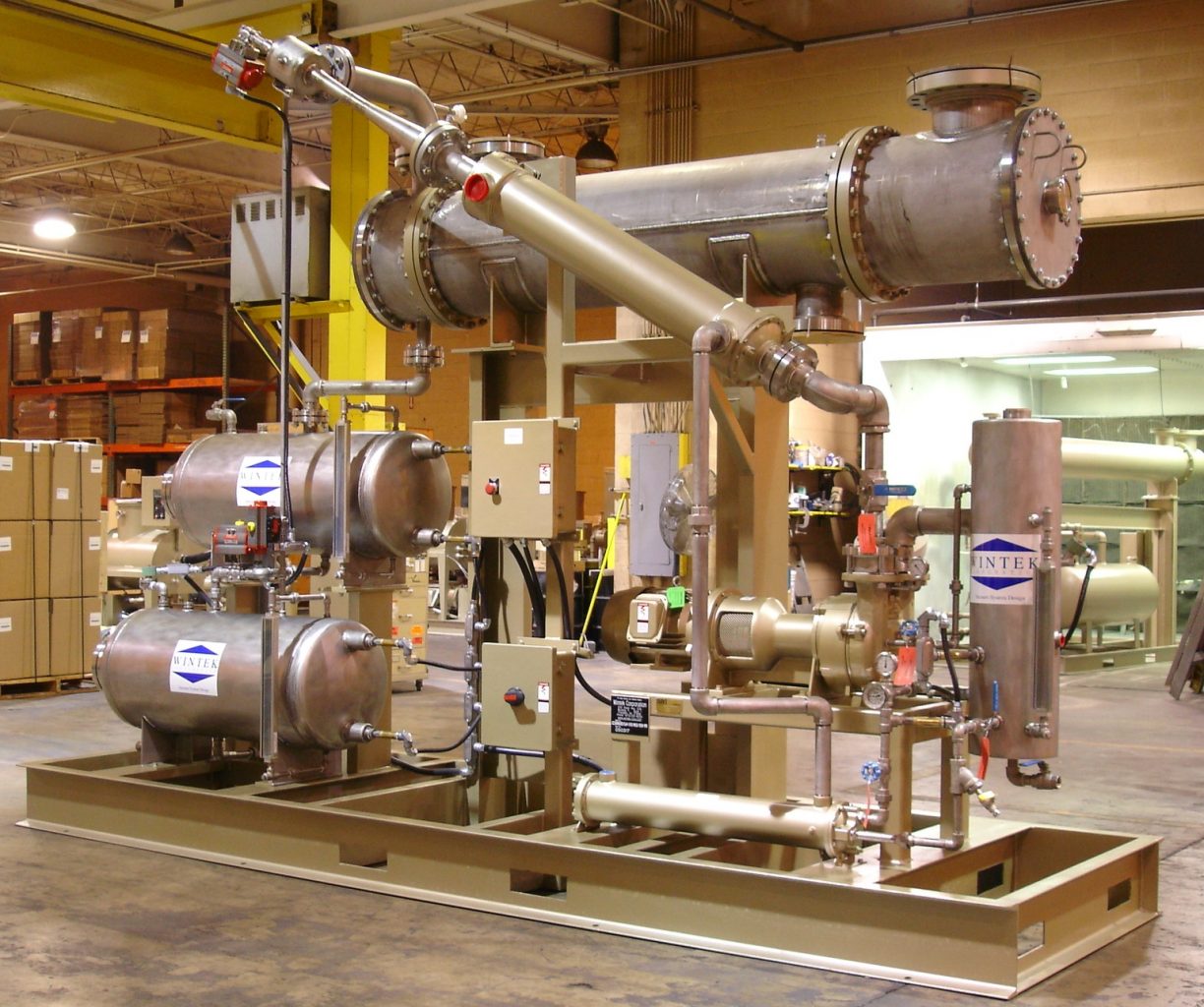
vacuum drying, condenser liquid ring vacuum system with a transfer pump
Wintek SN 18016: Vacuum Drying, Vapors Removed: 2,000 kg wet cake, 70% moisture (water), Operating Vacuum Level: ~250 Torr Peak, ~75 Torr Final
double-drum-vacuum-dryer
Wintek SN 050317: Handles 1,500 lb/hr water and 35 lb/hr air at 25-30 Torr for a vacuum drying application.

Why Use Vacuum for Drying Applications

Vacuum drying is the fastest and most efficient way of achieving the driest possible product when compared to heat drying. Batch times can be decreased for drying processes using vacuum because vaporization occurs more readily and effectively under lower absolute conditions. When handling temperature sensitive products, such as in the pharmaceutical or polymer industries, vacuum drying is the most cost-effective solution. In the food industry, freeze drying maintains and preserves important flavors and vitamins consistently.

Wintek has extensive experience in the vacuum drying industry and works closely with many of the dryer manufacturers. Our process vacuum systems are custom-built to cater to any application that requires vacuum. Generally, Wintek recommends liquid ring vacuum systems for dryer applications because they are more rugged and can handle liquid and solid process carryover better than other types of vacuum pumps. While most dryers use filtration to prevent their solid product from leaving the vessel, the filter does not capture everything. Wintek’s process vacuum systems are ideal in these scenarios. Liquid ring vacuum pumps still operate if small amount of process carryover are present. However, in the case the dryer does not use filtration, Wintek provides systems with knockout pot filtration vessels in the system package to protect the system from process carryover.

FAQs about Vacuum Drying

Vacuum drying removes moisture from a material by reducing the surrounding pressure, which lowers the boiling point of water or other solvents present in the material, allowing evaporation to occur at much lower temperatures than conventional atmospheric drying methods that rely primarily on heat.

Many heat sensitive materials, such as pharmaceuticals, certain foods, electronic components, and some chemical products, can degrade, discolor, lose potency, or undergo unwanted chemical changes if exposed to the higher temperatures required for conventional drying, making the lower temperature capability of vacuum drying essential for preserving product quality.

Pharmaceutical manufacturing, food processing, electronics and semiconductor production, chemical and specialty materials manufacturing, and wood processing all commonly use vacuum drying, though the specific goals and equipment vary considerably across these applications.

Equipment choice depends on required vacuum depth and batch size, with liquid ring vacuum pumps commonly used for many industrial vacuum drying applications due to their tolerance for moisture and vapor, while rotary vane pumps or other dry pump technologies are sometimes used for smaller scale or more sensitive applications requiring cleaner operating conditions. Wintek specializes in selecting the most economic and reliable vacuum technology for a given application.

A condenser is typically included to capture the water vapor or solvent vapor removed from the material before it reaches the vacuum pump, reducing the vapor load on the pump, improving energy efficiency, and in some cases allowing recovery of valuable solvents that were removed during the drying process.

Common causes include poor heat transfer contact between the material and heated surfaces, inadequate mixing or agitation in batch systems, inconsistent vacuum levels throughout the chamber, and material loading that is too dense or uneven, which can prevent uniform moisture removal across the entire batch.

Endpoint is commonly determined by monitoring moisture content directly through sampling and testing, tracking weight loss of the material over time, or observing when vapor evolution and chamber pressure stabilize, indicating that residual moisture removal has effectively plateaued.

Regular attention to vacuum pump performance and seal condition, condenser cleanliness and effectiveness, checking for air in leakage through door seals and fittings, and periodic verification of achievable vacuum level and heating system performance are all important for maintaining consistent drying results over time.