
Vacuum extrusion is a method of removing volatiles from an extrusion process continuously. Wintek designs vacuum systems for several of the largest vacuum extruder manufacturers in the USA. We sell vacuum systems to large capacity, industrial-scale extruders to smaller, lab-scale extruders indiscriminately.

Why Extruders Need Vacuum

Vented (or two-stage) extruder design includes a “decompression zone.” While most of the extrusion process compresses the polymer, the channel suddenly expands about two-thirds down the screw in vented extrusion. The extra volume in the channel allows any trapped gasses to escape. Furthermore, the vacuum system lowers the pressure exposed to this vent; thus, removing any undesired moisture, air, solvents or reactants from the product. At high temperatures, some polymer melts degrade into volatile organic compounds (VOCs). The vacuum systems Wintek designs remove these volatile compounds from the end-product.

The Liquid Ring Vacuum Pump and Process Carryover

For extruder applications, Wintek recommends the liquid ring vacuum pump because these pumps handle small amounts of solids carryover without issue. In contrast, dry vacuum pumps often clog from accumulating carryover. Repairing these dry pumps can be quite costly. If properly taken care of, liquid ring pumps operate for 10+ years in extrusion applications without issue.

Carryover is always a concern with extruders, so most systems are liquid ring vacuum pumps with inlet filters or inlet knockout pots. Moreover, these filtration elements remove as much of the solids as possible before the process stream enters the pump.

Altogether Wintek designs vacuum systems ranging from simple once-thru, no-recovery to full recovery water liquid ring vacuum systems operating at 20-25″HgV. Depending on the customer requirements, either configuration suffice. Additionally, Wintek often designs more sophisticated, higher vacuum systems.
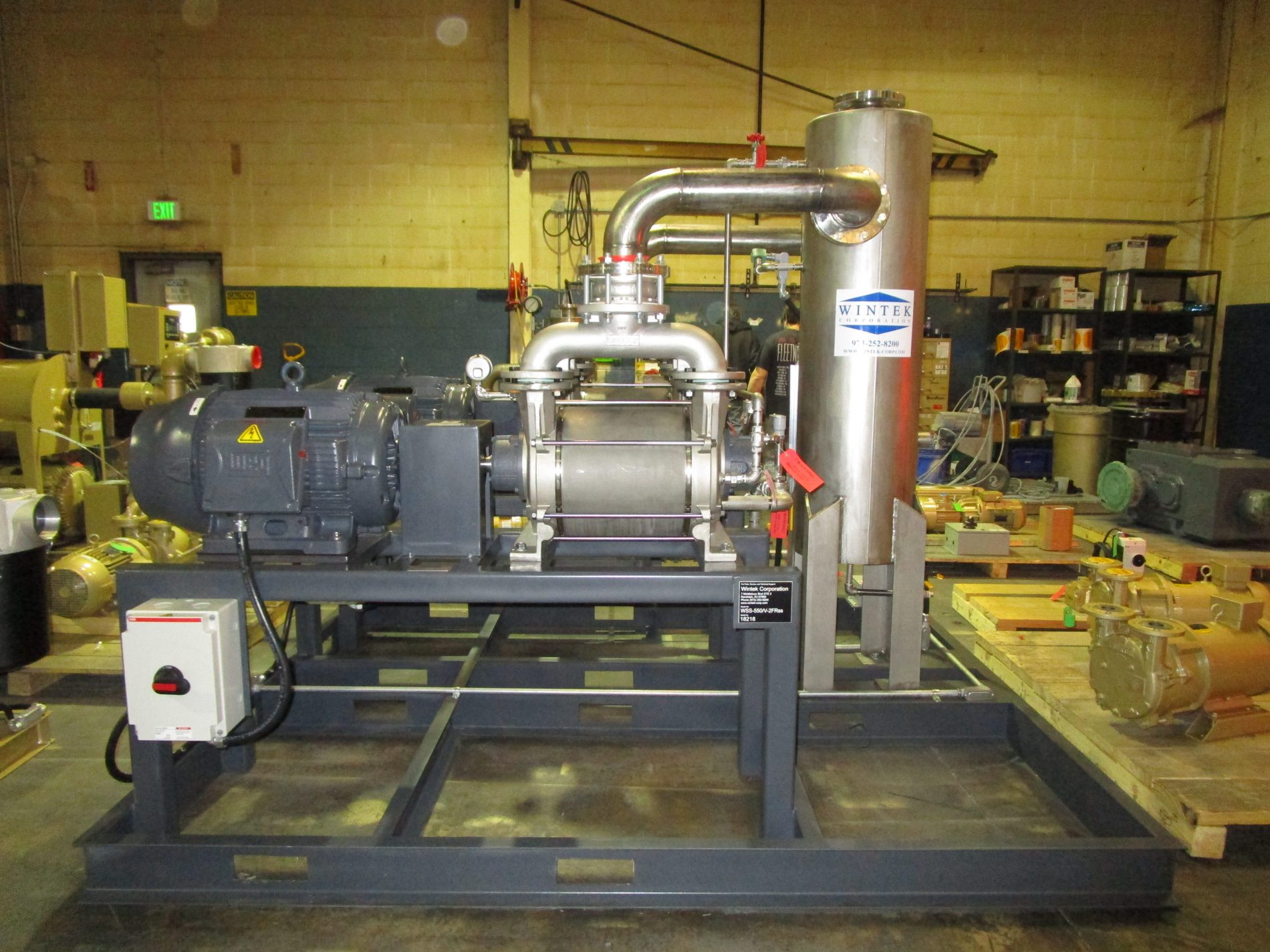
liquid ring vacuum system, duplex, high-capacity in stainless-steel materials
Wintek SN 18218: Duplex, high capacity liquid ring vacuum system, built in stainless-steel materials. Designed to achieve 20-25″HgV on a vented vacuum extruder application.

FAQs about Vacuum Extrusion

Vacuum extrusion is an extrusion process where a vacuum is applied to the material, typically a clay, ceramic, or polymer mixture, before or during its passage through the extrusion die, removing trapped air pockets or moisture that would otherwise weaken the final product or create visible defects. Wintek Corporation designs advanced systems for these extrusion lines. Their custom configurations deliver high performance and reliability.

Air pockets trapped within an extruded material create voids or weak points that can lead to cracking, reduced structural strength, uneven density, or surface defects.

Brick, tile, and ceramic pipe manufacturing rely heavily on vacuum extrusion, along with plastic pipe, profile, and sheet extrusion, food processing applications like sausage casing extrusion, and pottery or ceramic art production. Wintek designs custom vacuum systems that are optimized to support all of these industrial applications.

Clay material is fed into an extruder, often called a pug mill, where it’s mixed and de-aired under vacuum before being forced through a die that shapes it into the desired cross section, such as a standard brick shape, with the vacuum step critical for producing a dense, void free product capable of withstanding the firing process.

Removing trapped air and volatile gases from molten plastic during extrusion helps prevent bubbles, voids, or surface imperfections in the finished product, resulting in more consistent wall thickness, improved mechanical properties, and better overall surface finish compared to extrusion without vacuum de-airing.

Wintek commonly uses liquid ring vacuum pumps in extrusion applications due to their tolerance for moisture, dust, and particulate carryover that can occur when pulling vacuum on clay, ceramic, or certain plastic processing lines. Other types of vacuum pumps routinely experience reliability issues due to the harsh operating conditions in most extrusion processes. Choose from a selection of liquid ring vacuum pumps here.

Deeper vacuum generally removes more entrapped air and produces a denser, more homogeneous material, though the specific vacuum level required depends on the material type, moisture content, and the sensitivity of the final application to any residual air content. Wintek’s systems, which can pull low vacuums to the customers specifications, are perfect for this application.

Common causes include insufficient vacuum level or pump capacity for the material throughput, inadequate residence time in the vacuum chamber section, material moisture content that’s too high or too low for effective air removal, and mechanical issues like worn seals or auger components that allow air to be reintroduced after the vacuum stage. Through the 40+ years of experience Wintek has, we are able to avoid these issues and produce cost-effective vacuum systems.

Regular attention to vacuum pump performance, inspection and cleaning of the vacuum chamber to prevent material buildup or clogging, checking seals and gaskets for air in-leakage, and knockout pot cleaning are important tasks in maintaining a process vacuum system in an extrusion application. Wintek’s process vacuum systems are designed with reliability and maintenance in mind to minimize downtime.

Yes, particularly in plastics extrusion, though recycled material can sometimes contain more contaminants, moisture, or inconsistent composition than virgin material, which may require adjustments to vacuum level, screening, or drying steps beforehand to maintain effective de-airing and consistent product quality.